Journal — Light
Morning or afternoon: when do palace photos look best?
A guest asked me this recently: what's actually different between a morning shoot and an afternoon one? It's a good question, so here's how I'd answer it, with frames from my own sessions.

Yong-Kwon Jeong
Founder & Chief Photographer, Aurea Studio
My short answer
If you're asking me, late afternoon. The sun gets low, the light turns gold, and the palace starts to empty out. Morning has its own look, though: cooler, cleaner color. The stretch I'd avoid if you can is roughly 10 a.m. to 1 p.m., when the crowds peak and the sun is right overhead.
When it's crowded
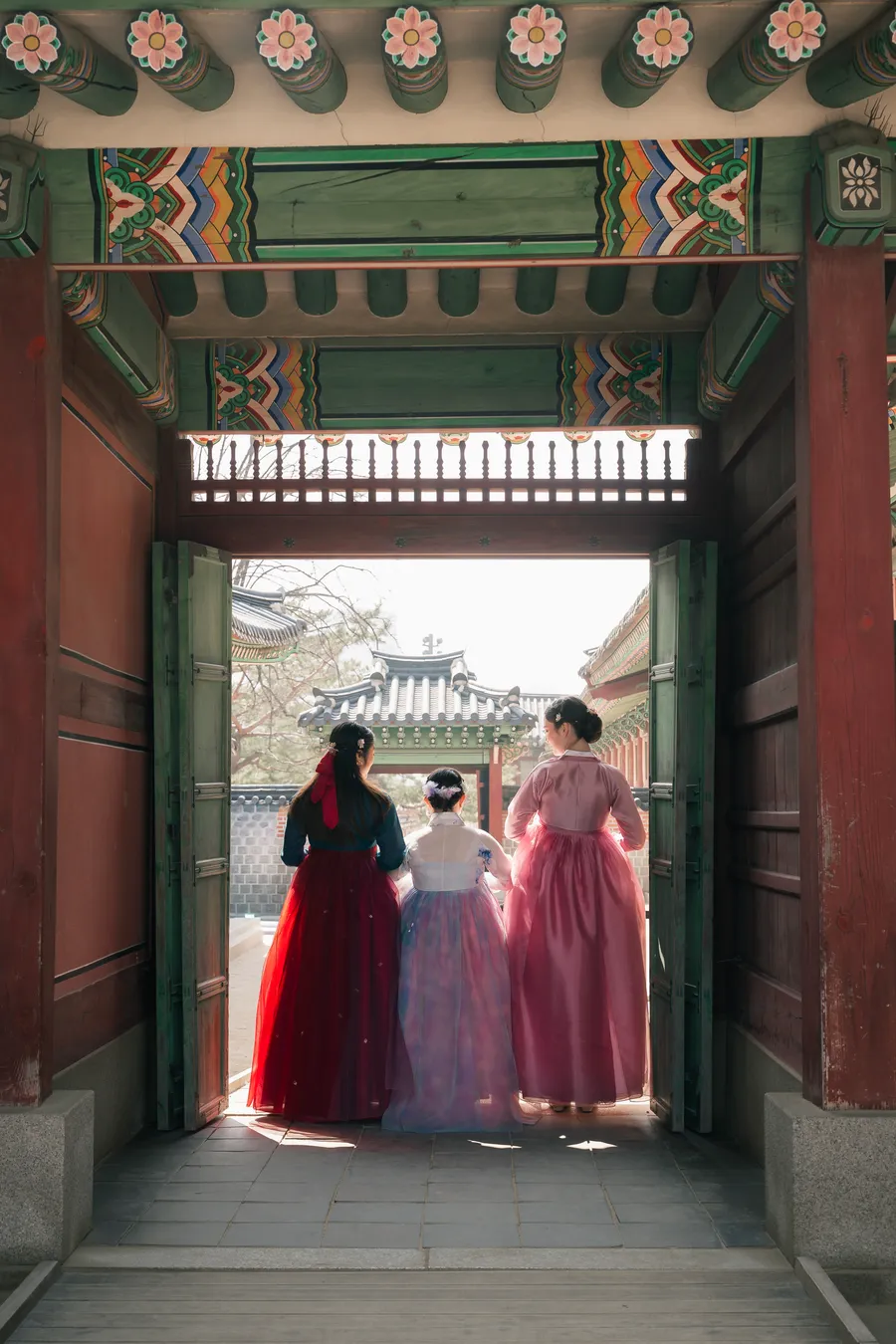
People tend to assume mornings are quiet. They aren't, at least not after 10. The palaces open at 9, and that first hour is calm. From around 10 until 1, it's the busiest the palace gets all day. Later in the afternoon it thins out again, and for me that's a big deal: fewer people walking through the frame means I spend our hour shooting you, not waiting for a gap.
Why I put you in the shade at noon
Around midday the sun is right above us. Light from straight overhead drops shadows into your eyes and under your nose, and if I turn you toward the sun, you'll squint. So at noon I pull you into the shade: under a gate roof, along a colonnade, inside a doorway. You can still get lovely photos that way. The gateway shot above was taken at five to twelve. But the shade decides where we can shoot, and a lot of the open, sunny spots are off the table.
Golden hour
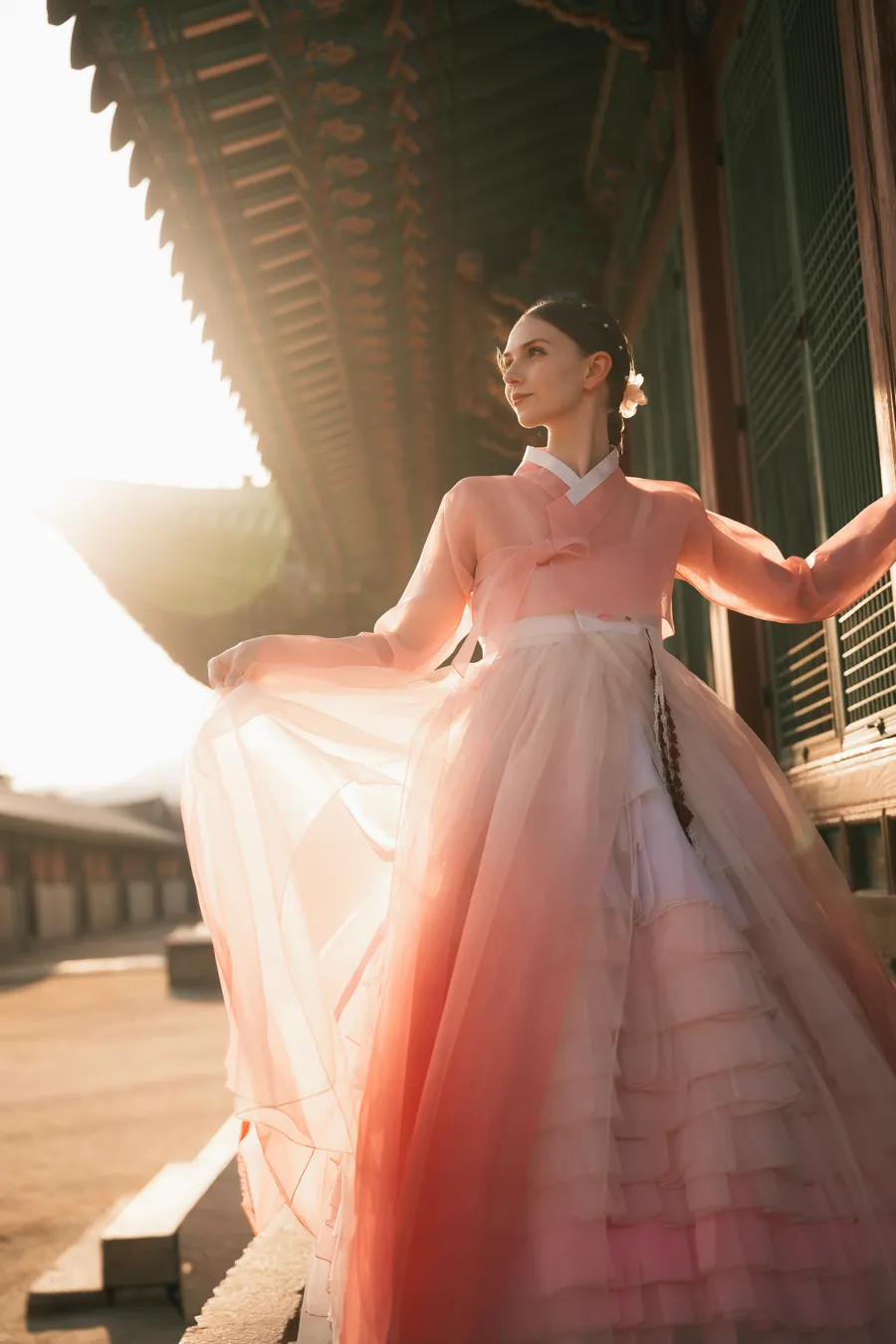
Late in the day the sun drops low and the light goes soft and golden. That's golden hour. With the sun low I can put it behind you, so your hair and the edges of your hanbok skirt light up while your face stays soft and even. No squinting.
It changes with the seasons. In winter the sun sets early and the palaces close early, so my last session starts at 3 p.m., and by then the light is already low and warm. In summer the sun is still fairly high at that hour, so you get softer light than at noon, but not the full gold.
Blue mornings, gold afternoons
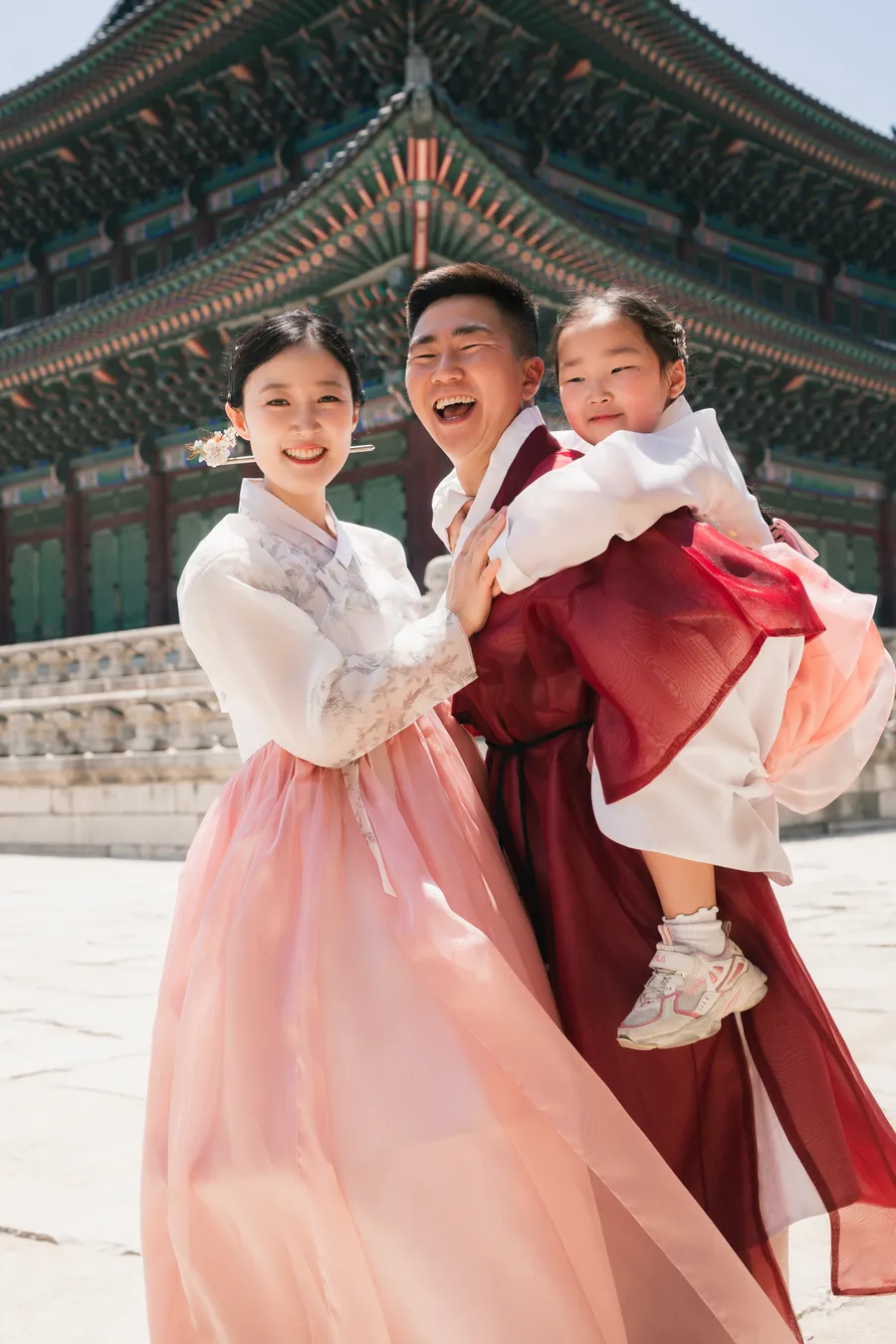
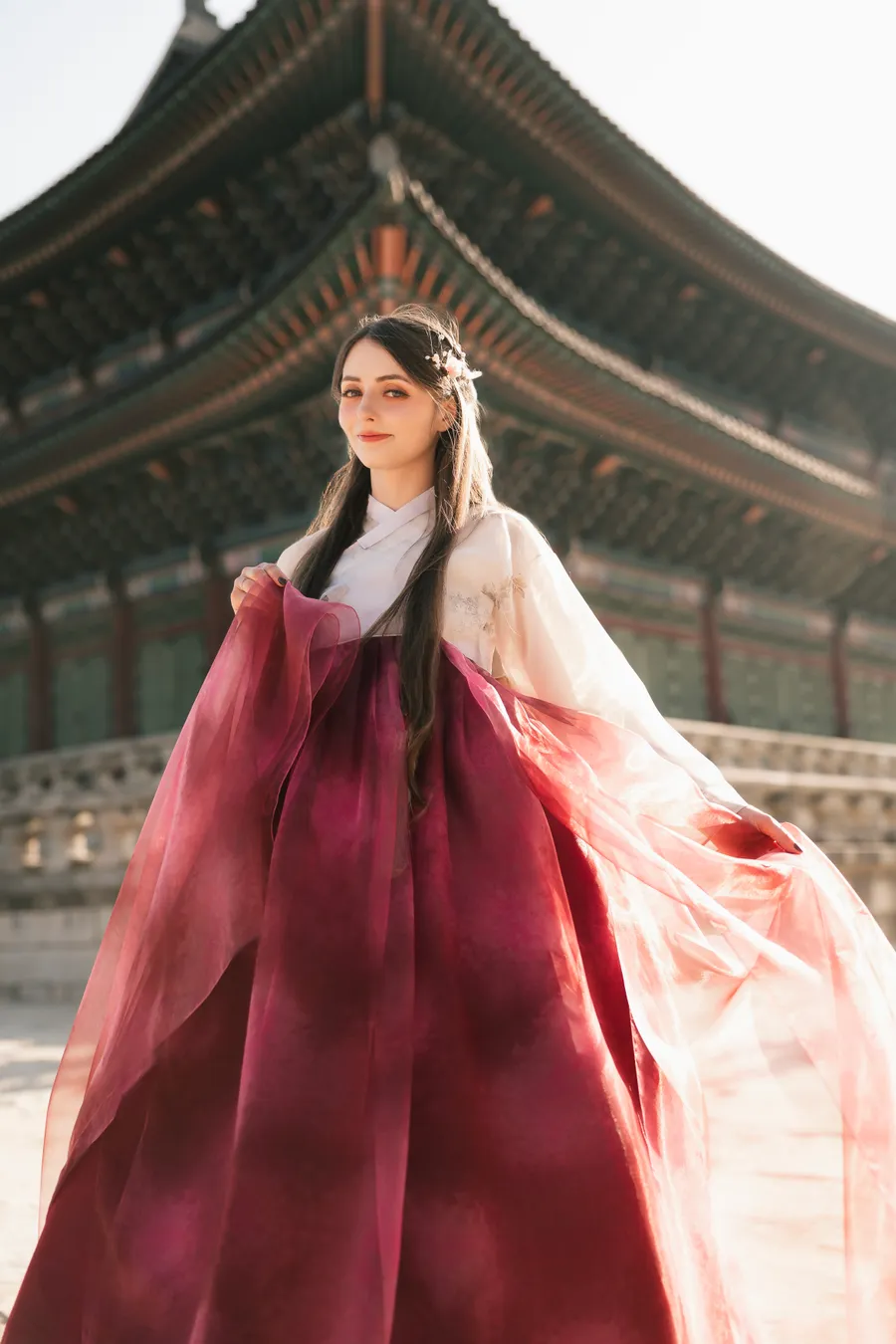
Put one of my morning shots next to an afternoon one and the first thing you'll notice is the color. Morning frames come out a little cool, with a hint of blue. Afternoon frames lean orange and yellow. I like both. Cool light keeps whites crisp and suits pastel hanbok. Warm light is kind to skin and makes deep reds glow. If you already know which look you love, let that pick your time.
A few quick ones
- Is morning a bad choice? Not at all. Morning photos are bright and clean. Just expect more people around, and as noon gets closer, more of our time in the shade. I plan for that.
- Can you promise golden hour? I wish I could. It depends on the season and the weather. On a cloudy day the light is soft all day, and the color difference mostly disappears.
- What if midday is my only option? Then we work the shade. Palace gates, colonnades and deep eaves are practically built for it.
At a glance
| Morning | Late afternoon | |
|---|---|---|
| Crowds | Very busy from about 10 a.m. to 1 p.m. | Quieter, and thinner still late in the day |
| Light | Bright and even; harsh as noon approaches | Low, soft, often golden |
| Color | Cooler, a touch of blue | Warmer, orange and gold |
| Best for | Crisp detail, clean whites, cool palettes | Backlight, glow, a romantic mood |
Still deciding which palace? That's a whole other question, and I've written about it here.